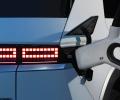
India may see its busiest EV festive season in 2025 with SUVs, luxury cars and scooters set to launch, but rare-earth supply bottlenecks risk delaying rollouts.

Electric vehicle (EV) manufacturers breathed a sigh of relief after the GST Council on Wednesday night retained the concessional 5 per cent rate on EVs, though they now face competition from small petrol and diesel cars, which will attract a lower 18 per cent levy.

But when it comes to e2W, China is the dominant player and had grabbed over 76 per cent share of total e2W imports in 2025 with brands like Yadea, NIU and Sunra dominating the market.

'... that work is done. The task is to reallocate what has been built, with the courage of a founder and the discipline of an owner.'
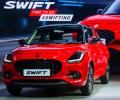
Passenger vehicle sales in India are estimated to have surged by nearly 25 per cent in June 2024, reaching approximately 4 lakh units, with Maruti Suzuki, Tata Motors PV, and Mahindra & Mahindra leading the growth, despite concerns over geopolitical tensions and monsoon impact.

Indian carmakers, including Maruti Suzuki and Kia India, reported robust sales growth in May 2026, with both companies achieving their highest-ever monthly sales despite rising fuel prices. Maruti Suzuki's domestic sales surged to 1,93,535 units, while Kia India recorded 27,586 units, driven by strong demand in mini and compact segments and a shift towards electric and CNG vehicles.

Companies are already diversifying sourcing, raising prices, and reworking operating models as the disruption drags on.

Yamaha expects its first EVs to hit showrooms by the last quarter of FY26 (January - March), once network readiness is complete.

Tata Motors' MD and CEO, Girish Wagh, has identified rising diesel prices as the most significant threat to India's commercial vehicle (CV) industry recovery, despite the sector recently surpassing its pre-FY19 wholesale peak. Diesel costs account for 25-50% of a truck operator's total cost of ownership, making any increase a critical concern for fleet economics.
BMW India has outpaced rival Mercedes-Benz India in luxury car registrations for the first quarter of calendar year 2026, driven by new product launches and a growing electric vehicle segment, even as the overall luxury car market remains largely flat.

koda Auto Volkswagen India aims to capture a 5 per cent share of India's passenger vehicle market by 2030, driven by new product launches, including alternate fuel vehicles, and a potential entry into the high-volume sub-4 metre SUV segment.
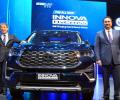
Grant Thornton Bharat's latest survey indicates that hybrids are set to consolidate market share this festive season, bridging the gap between conventional petrol engines and the emerging electric vehicle segment.

French automotive component maker Valeo on Wednesday said it will invest over Rs 2,150 crore in India and treble its annual sales in the country to around Rs 7,510 crore by 2028.
This is the time for India to plan forward fully, with the goal of Atmanirbharata, and energy security. The Persian Gulf is no longer a reliable source, points out Rajeev Srinivasan.

India's electric passenger vehicle (ePV) market has expanded sharply over the past five years, with registrations rising from just 3,252 units in 2020 to about 170,000 in 2025. Throughout this scale-up, southern states have remained the bedrock of adoption, consistently contributing around one-third of national electric vehicle (EV) registrations - emphasising the region's role as the structural backbone of India's EV transition.

'In all these years of rupee depreciation, of rising oil prices, of inflation caused by import dependence, not one leader had the courage to look the people in the eye and say: Please do this for your country.'

Tamil Nadu Governor RV Arlekar announced that the TVK regime, led by Chief Minister C Joseph Vijay, will take steps to ensure fair financial devolution from the Centre, including pursuing the matter in the Supreme Court. The government also plans to conduct a 'Social Justice Survey' and address the state's severe financial deterioration.

India's rapidly ageing truck fleet, with 42% of vehicles over 12 years old, is set to trigger a replacement-driven growth of 3-5% annually over the next five years.

Leading automakers Maruti Suzuki, Tata Motors, Mahindra & Mahindra, and Hyundai Motor India posted higher sales in January riding on the growth momentum ushered in by the GST reforms in the festive period last year.
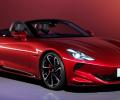
Maruti Suzuki, Tata Motors, Mahindra & Mahindra, Hyundai and MG Motors are gearing up to introduce EVs in India.
Passenger vehicle sales in India reached a record high of 4.7 million units in FY26, boosted by strong performances from major automakers and the implementation of GST 2.0.

Tesla has launched its second model in India, the three-row six-seater SUV Model YL, priced at Rs 61.99 lakh, while also announcing plans to expand its service and body shop network across major Indian cities. The company is also considering bringing its humanoid robot Optimus and vertically integrated energy solutions business to India at an appropriate time.

Brokerage Bernstein has warned Prime Minister Narendra Modi that India risks squandering recent economic gains unless it accelerates structural reforms, particularly in jobs, manufacturing and innovation.

What we will not do is discount deeply, neither will we compromise on product substance, says Managing Director and Chief Executive Officer (MD&CEO) Santosh Iyer.
After a slew of programmes to facilitate electric-vehicle (EV) adoption in India, the NITI Aayog has said the government has done enough on incentives and now it's time to take the programme a step further with "strong signals" through regulations and mandates.

Bharat Forge reported modest Q4FY26 results but provided strong guidance, anticipating significant growth from its defence, aerospace, and data centre segments, with a projected 25 per cent revenue growth in Indian manufacturing for FY27, despite current high valuations.

German luxury carmaker Mercedes-Benz is considering assembling more electric vehicles at its plant in India not merely to gain cost advantage but also to meet its zero emission mobility and carbon neutral setup goals, according to a senior company official. Mercedes-Benz India, which currently assembles its flagship electric luxury sedan EQS at its Chakan unit, is considering localisation of other models depending on demand.

India's electric vehicle (EV) markets expanded gains in January compared to the year-ago period, as two-wheeler and passenger vehicle sales triggered a shuffle in the competitive landscape, data from an automobile dealers' association showed.

Passenger vehicle (PV) sales growth in India is expected to moderate to 3-5 per cent year-on-year (Y-o-Y) in financial year 2027 (FY27) due to a high base and preponed replacement demand, according to a report released by India Ratings and Research on Thursday.

The 63-seater open-top bus, manufactured by Ashok Leyland's arm Switch Mobility, was gifted to the city's tourism department as a corporate social responsibility initiative.

Skoda India is focusing on cleaner fuel options, including CNG and EVs, while compact SUV Kylaq drives volumes, expands first-time buyers and strengthens the brand in India's competitive market
Top executives from Siam and major carmakers recently met with Heavy Industries Secretary Kamran Rizvi to discuss the matter. Officials from NITI Aayog were also present.
Truck rentals saw a positive momentum across most key trunk routes due to an increased pre-kharif agricultural activity and a resilient manufacturing sector. The Kolkata-Guwahati-Kolkata corridor witnessed a month-on-month (M-o-M) rise of 2.4 per cent, while the Mumbai-Chennai-Mumbai route grew by 1.9 per cent and the Delhi-Hyderabad-Delhi route saw a 1.6 per cent increase in truck rentals, said June edition of the Shriram Mobility Bulletin.
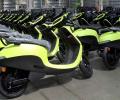
India's electric two-wheeler (e2W) manufacturers have urged the government to extend subsidies under the PM E-Drive (Electric Drive Revolution in Innovative Vehicle Enhancement) scheme beyond March 2026, cautioning that a withdrawal could slow near-term demand even as confidence in long-term electric mobility adoption remains intact.

Two-wheeler (2W) major Bajaj Auto on Friday posted its highest ever quarterly revenue and profit during the third quarter of 2025-26 (Q3FY26). Bajaj Auto's consolidated net profit for the quarter grew by 25 per cent year-on-year (Y-o-Y) to Rs 2,749 crore, with the revenue also growing 23 per cent to Rs 16,204 crore.

Maruti Suzuki sold more cars than ever before, earned more money, and saw many first-time buyers choosing small cars again.

The share of first-time luxury customers in BMW's portfolio has risen sharply -- from around 43 per cent in 2024 to nearly 49 per cent in 2025. In some models, the figure is even higher.
Starting January, the market is expected to welcome models like the Tata Punch 2025 which is expected to be around 6 lakh, Mahindra BE 07 EV around 29 lakh, Maruti WagonR Electric around 8.5 lakh, Toyota 3-Row SUV around 14 lakh, and Volkswagen Tera to be around 8 lakh.
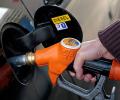
Growth in demand for diesel, India's most consumed petroleum product, fell to its lowest since the pandemic in the financial year ended March 31 as the economy expands at a slower pace and consumption shifts to cleaner fuels. Diesel consumption rose 2 per cent to 91.4 million tonnes in 2024-25 (April 2024 to March 2025) fiscal, according to provisional data released by the Petroleum Planning and Analysis Cell (PPAC) of the Oil Ministry.

Renault India has launched the all-new Renault Duster, featuring a turbo petrol engine and advanced features, with dispatches underway nationwide.
